



Opioid Receptor Modulator
- 1
- 2
-
Nalmefene
 0 Images
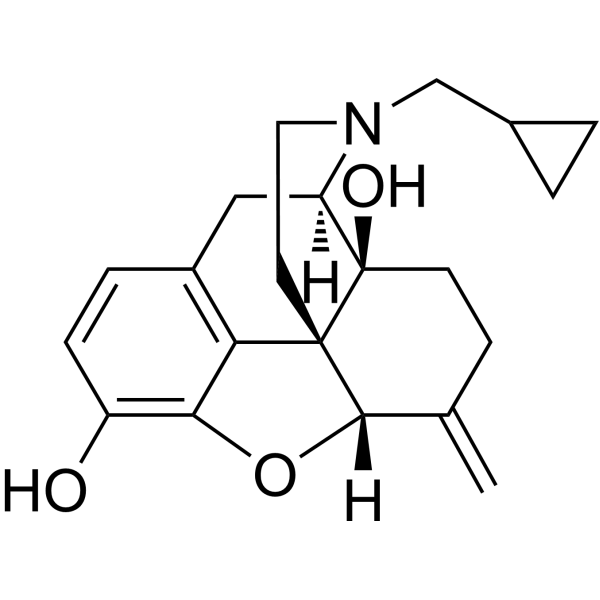
Nalmefene is a BBB-penetrable opioid receptor modulator. Nalmefene is an antagonist of MOR and DOR, and a partial agonist of KOR. Nalmefene has anti-inflammatory and neuroprotective activities. Nalmefene can be used in the research of reducing alcohol-dependent disorders.
-
Samidorphan
 0 ImagesSynonyms: ALKS-33; RDC-0313
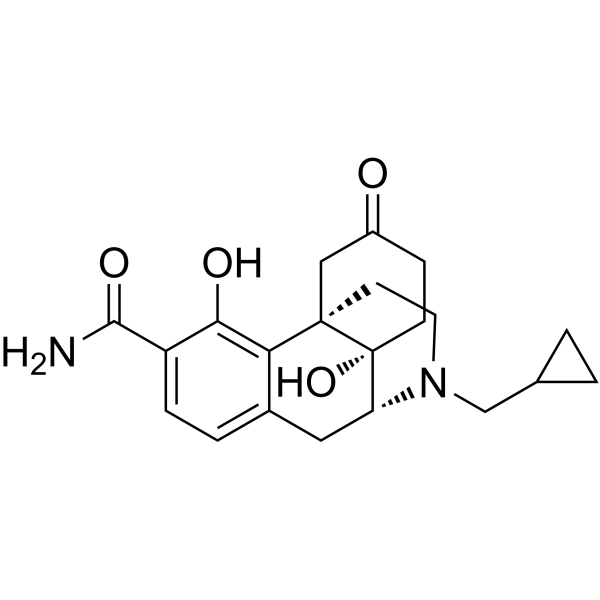
Samidorphan (ALKS-33) is an orally active opioid receptor modulator that targets μ-opioid, κ-opioid, and δ-opioid receptors. Samidorphan acts as a μ-opioid receptor antagonist and a partial agonist at κ-opioid and δ-opioid receptors. In vivo, Samidorphan functions primarily as an opioid receptor antagonist and ameliorates depressive behaviors in animals.
-
Noribogaine hydrochloride
 0 Images
Noribogaine hydrochloride is an orally active, blood-brain barrier permeable SERT inhibitor (IC50=50-300 nM) and hERG channel blocker. Noribogaine hydrochloride enhances serotonergic transmission, activates the κ-opioid receptor (OPRK) G protein signaling pathway and inhibits β-arrestin recruitment. Meanwhile, Noribogaine hydrochloride blocks the μ-opioid receptor (OPRM) signaling pathway as well as ion channels associated with cardiac repolarization. Noribogaine hydrochloride induces neuritogenesis, upregulates GDNF mRNA expression, and modulates opioid tolerance. Noribogaine hydrochloride reduces alcohol-seeking behavior in experimental animals, and is widely used in studies related to depression, addiction, alcoholism, and cardiotoxicity.
-
BMS-986121
 0 Images
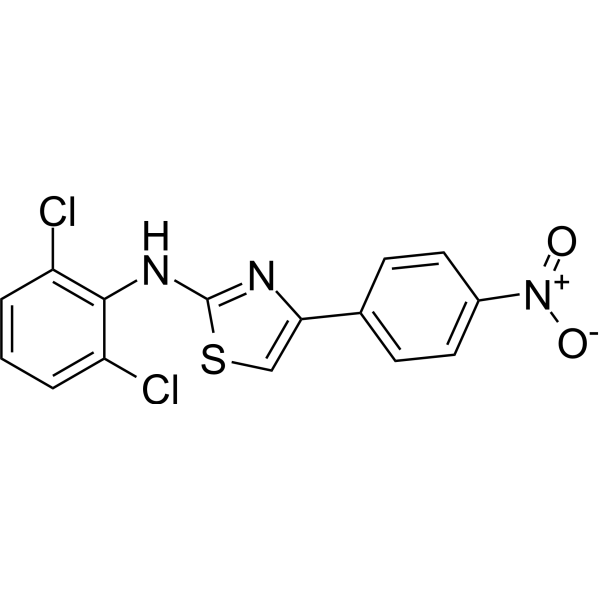
BMS-986121 is a positive allosteric modulator (PAM) of the μ opioid receptor extracted from patent WO2014107344. BMS-986121 is built on a chemical scaffold representing a new chemotype for μ receptor PAMs.
-
β-Endorphin (rat)
 0 Images
β-Endorphin (rat) is an endogenous opioid neuropeptide and peptide hormone. β-Endorphin (rat) has analgesic activity and also contributes to food intake in satiated rats. β-Endorphin (rat) can be used in the research of neurological diseases such as analgesia and drug addiction.
-
Naloxone benzoylhydrazone
 0 ImagesSynonyms: NalBzoH
Naloxone benzoylhydrazone (NalBzoH) is a mixed agonist/antagonist. Naloxone benzoylhydrazone is a prototypic κ3-opioid receptor agonist, and a partial agonist at the cloned μ and δ opioid receptors, and an antagonist at opioid-like NOP receptors. Naloxone benzoylhydrazone has potently analgesia effect.
-
Samidorphan-d4
 0 ImagesCat. No.: HY-123689SSynonyms: ALKS-33-d4; RDC-0313-d4
Samidorphan-d4 is the deuterium labeled Samidorphan(HY-123689).Samidorphan (ALKS-33) is an orally active opioid system modulator that has a high affinity for binding with μ‐opioid, κ‐opioid, and δ‐opioid receptors. Samidorphan acts as an antagonist at μ‐opioid receptors and acts as a partial agonist at k-opioid and δ‐opioid receptors. Samidorphan primarily acts as an opioid receptor antagonist in vivo.
-
Samidorphan-d5
 0 ImagesCat. No.: HY-123689S1Synonyms: ALKS-33-d5; RDC-0313-d5
Samidorphan-d5 (ALKS-33-d5) is is a deuterated compound of Samidorphan. Samidorphan is an orally active opioid system modulator that binds with high affinity to μ-opioid, κ-opioid, and δ-opioid receptors. Samidorphan is a μ-opioid receptor antagonist and a partial agonist at k-opioid and δ-opioid receptors. Samidorphan acts primarily as an opioid receptor antagonist in vivo.
-
Cyclazocine
 0 Images
Cyclazocine is a μ, δ, and κ opioid receptor modulator with Ki values of 0.32, 1.1, and 0.18 nM, respectively. Cyclazocine exhibits "mixed" pharmacological activities, acting as a μ-partial antagonist, κ-agonist, and low-affinity δ ligand. Cyclazocine shows antinociceptive activity in mice. Cyclazocine can be used in studies on psychoactive substance addiction.
-
DOR agonist 3
 0 ImagesCat. No.: HY-175366CAS No.: 939956-07-7
DOR agonist 3 (Compound 10) is a δ-opioid receptor (DOR)-selective positive allosteric modulator. DOR agonist 3 enhances G protein signaling while reducing β-arrestin2 recruitment. DOR agonist 3 is promising for research of chronic pain and depression.
-
KOR modulator-1
 0 ImagesCat. No.: HY-187342
KOR modulator-1 is a blood-brain barrier-permeable kappa opioid receptor (KOR) modulator. KOR modulator-1 induces antinociceptive effects without significant sedation or impairment of neuromuscular coordination. KOR modulator-1 can be used for the research of chronic pain.
-
DS34942424
 0 ImagesCat. No.: HY-145369CAS No.: 2967655-39-4
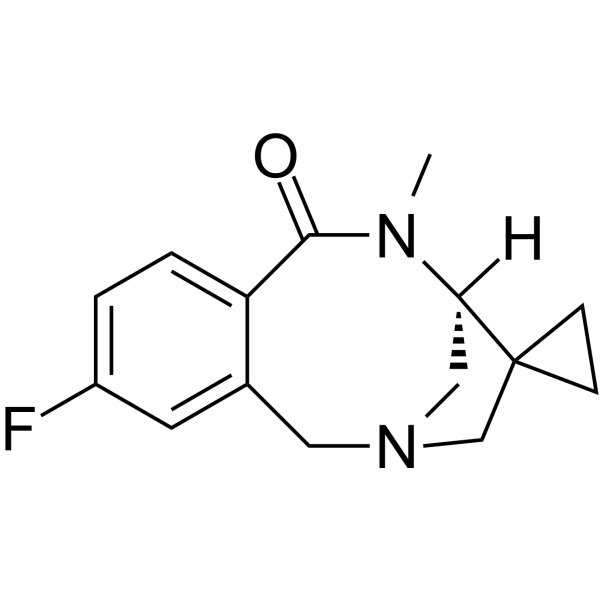
DS34942424 is an orally potent analgesic without mu opioid receptor agonist activity.
-
Tyr-c[D-Lys-p-F-Phe-Phe-Asp]-D-Pro-NH2
![Tyr-c[D-Lys-p-F-Phe-Phe-Asp]-D-Pro-NH2](https://file.medchemexpress.com/product_pic/hy-p11895.gif "Click to View Tyr-c[D-Lys-p-F-Phe-Phe-Asp]-D-Pro-NH2 Product Detail") 0 ImagesCat. No.: HY-P11895CAS No.: 3081054-21-6
0 ImagesCat. No.: HY-P11895CAS No.: 3081054-21-6Tyr-c [D-Lys-p-F-Phe-Phe-Asp]-D-Pro-NH2 is a multi-opioid receptor (Opioid Receptor) modulator, acting as a MOR/KOR agonist and a DOR antagonist. Tyr-c [D-Lys-p-F-Phe-Phe-Asp]-D-Pro-NH2 activates the G protein-mediated cAMP inhibitory pathway and β-arrestin2 recruitment pathway downstream of MOR, with an EC50 of 159 nM for β-arrestin2 recruitment, an EC50 of 1.1 nM for MOR-mediated calcium mobilization, and an EC50 of 397 nM for KOR. Tyr-c [D-Lys-p-F-Phe-Phe-Asp]-D-Pro-NH2 exhibits potent analgesic activity in vivo. It can be used in studies related to opioid receptor function and analgesia.
-
KOR agonist 5
 0 ImagesCat. No.: HY-172407
KOR agonist 5 (Compound 10a) is a KOR/MOR modulator with agonistic activity towards KOR and antagonistic activity towards MOR. KOR agonist 5 can effectively block morphine-induced antinociception and inhibition of intestinal motility. KOR agonist 5 can be used in the research of Substance Use Disorder (SUD).
-
6-Fluoro-3-(1,2,3,6-tetrahydropyridin-4-yl)-1H-indole
 0 ImagesCat. No.: HY-W158948CAS No.: 180161-14-2
6-Fluoro-3-(1,2,3,6-tetrahydropyridin-4-yl)-1H-indole is a ORL-1 receptor modulator. 6-Fluoro-3-(1,2,3,6-tetrahydropyridin-4-yl)-1H-indole regulates downstream pathways associated with nociception, cognition and physiological processes. 6-Fluoro-3-(1,2,3,6-tetrahydropyridin-4-yl)-1H-indole is used in the research of central nervous system diseases and pain-related disorders including anxiety, depression, Alzheimer's disease and attention deficit disorder.
-
BPRMU191
 0 ImagesCat. No.: HY-159923CAS No.: 2131199-52-3
BPRMU191 is a μ-opioid receptor (MOR) modulator that converts small-molecule morphinan antagonists into G protein-biased MOR agonists, thereby inducing MOR-dependent activation and analgesic effects. Co-administration of BPRMU191 with morphinan antagonists provides analgesia while reducing side effects such as gastrointestinal dysfunction, antinociceptive tolerance, and dependency-related adverse effects. BPRMU191, in combination with morphinan antagonists, offers a potential strategy for studying severe pain management and G protein-coupled receptor modulation.
-
HINT1-IN-1
 0 ImagesCat. No.: HY-173016
HINT1-IN-1 (Compound 8) is the inhibitor for histidine triad nucleotide-binding protein 1 (HINT1) with a Ki of 1.14 μM. HINT1-IN-1 affects the cross-regulation between μ-opioid receptor (MOR) and NMDA receptor (NMDAR). HINT1-IN-1 enhances the analgesic effect of morphine without causing opioid tolerance and has independent analgesic effects in mouse model.
-
DBPR116
 0 Images
DBPR116 is a prodrug of BPRMU191 (HY-159923) with blood-brain barrier penetration capability. DBPR116 significantly improves the delivery of centrally targeted drugs. In combination with the antagonist Naltrexone (HY-76711), DBPR116 demonstrated superior safety and analgesic efficacy compared to morphine in various in vivo pharmacological studies, including thermal pain models, cancer pain models, constipation, sedation, psychological dependence, heart rate, and respiratory frequency. As a prodrug strategy for peripheral administration, DBPR116 effectively alleviates pain while reducing adverse effects, showing potential as a safer opioid analgesic.
-
MOR modulator-1
 0 ImagesCat. No.: HY-170437CAS No.: 2976336-81-7
MOR modulator-1 (compound 6) is a potent and selective μ opioid receptor (MOR) modulator. MOR modulator-1 exhibits improved opioid receptor selectivity, enhanced in vivo antagonistic effect, and overall fewer withdrawal symptoms compared to NAT (6α-configuration). MOR modulator-1 links with carboxamido linker μ, δ, γ with Kis of 0.25, 41.1, 1.30 nM, respectively[1]
-
MPAM-15
 0 ImagesCat. No.: HY-181956CAS No.: 312632-55-6
MPAM-15 is a blood-brain barrier-penetrant pan-orthosteric allosteric modulator (PAM) of opioid receptors, with ≥16-fold selectivity for μOR over δOR and κOR. MPAM-15 acts as an anti-nociceptive potentiator and analgesic, and its activity is observed in mouse models via both intracerebroventricular and intraperitoneal administration. MPAM-15 is applicable for pain-related research.
- 1
- 2



